
Get Support
+0116 4950505
UK First Home Scheme Explained: How the New 20% Equity Loan Could Help First-Time Buyers

A new government-backed scheme could allow first-time buyers to purchase a new-build home with a deposit as low as 2.5%. But how does the scheme actually work, who is it for, and what happens to the government’s 20% equity loan when your property goes up—or down—in value?
The government has announced a new Your First Home scheme, aimed at helping first-time buyers who can afford the monthly cost of owning a home but struggle to save a large enough deposit.
The announcement comes at an interesting time for the property market, particularly the London new-build market, where sales have fallen significantly compared with last year.
According to property consultancy Molior, 5,606 new-build homes were sold in London during the first six months of 2026, compared with 8,840 during the same period in 2025. That represents a fall of almost 37%.
At the same time, thousands of completed new-build homes remain unsold.
So is Your First Home simply a way of helping buyers—or could it also be an attempt to get more new-build homes moving?
The answer is potentially both.
What is the Your First Home scheme?

Your First Home is a new government-backed equity loan scheme for first-time buyers in England.
Under the proposal announced by the government, eligible buyers will be able to purchase a qualifying new-build property with:
- A deposit of as little as 2.5%
- A government-backed equity loan of up to 20%
- A mortgage making up the remaining amount
- An initial interest-free period on the government equity loan
- A property purchased from a developer participating in the scheme
The government says the scheme is intended to reduce the deposit barrier for people who may be able to afford homeownership but cannot build up a traditional 5%, 10% or larger deposit.
However, there is an important point to remember.
The scheme has been announced, but the final rules have not yet been published.
The government is expected to confirm the details at the October 2026 Budget, including the income limits, local property price caps and implementation timetable.
That means buyers should treat the currently announced figures as the framework rather than assuming every final condition has already been confirmed.
How would the 20% equity loan work?
This is probably the most important part for buyers to understand.
Imagine a qualifying new-build property costs:
£300,000
Under the currently announced structure, a buyer could potentially have:
2.5% deposit: £7,500
20% government equity loan: £60,000
Remaining amount: £232,500
The £232,500 would then be covered by the buyer's mortgage, subject to the lender's affordability assessment and the final rules of the scheme.
That means the buyer would not need to borrow 97.5% of the property value through their mortgage.
Instead, the purchase could look roughly like this:
| Source | Amount | Percentage |
|---|---|---|
| Buyer's deposit | £7,500 | 2.5% |
| Government equity loan | £60,000 | 20% |
| Mortgage | £232,500 | 77.5% |
| Total | £300,000 | 100% |
The attraction is obvious: a buyer who has only managed to save £7,500 could potentially access a £300,000 home without taking out a 97.5% mortgage.
But there is a very important trade-off.
The £60,000 government contribution is not free money.
It is an equity loan.
What happens if your property goes up in value?
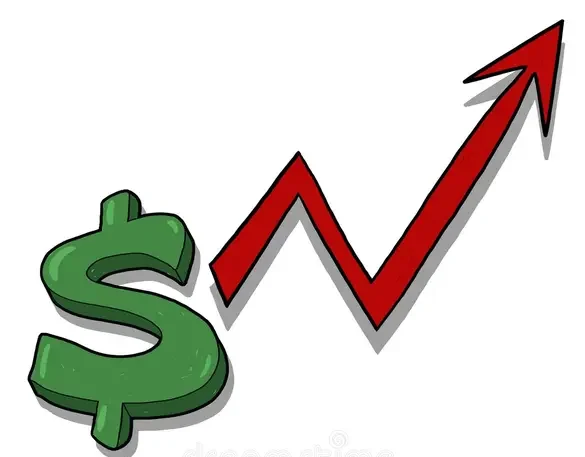
This is where buyers need to understand the difference between an ordinary loan and an equity loan.
An equity loan is linked to the value of the property.
So, using a simplified example, imagine you buy a property for:
£300,000
The government provides:
20% = £60,000
Now imagine that several years later your property is worth:
£400,000
If the final Your First Home rules operate on the same percentage-based principle used by previous Help to Buy equity loans, 20% of the £400,000 value would be:
£80,000
So although you originally received £60,000, the amount associated with the government's 20% share could become £80,000 if the property rises to £400,000.
That means the government participates in the change in the property's value.
Example
Purchase price: £300,000
Government share: 20%
Initial government contribution: £60,000
Later:
Property value: £400,000
20%: £80,000
The difference is:
£20,000
The buyer does not simply repay the original £60,000 if the final scheme uses this percentage-based equity structure.
However, this is an important area where buyers should wait for the final Your First Home legal and financial rules before relying on a particular repayment calculation. The government has not yet published the complete scheme documentation.
What if the property falls in value?
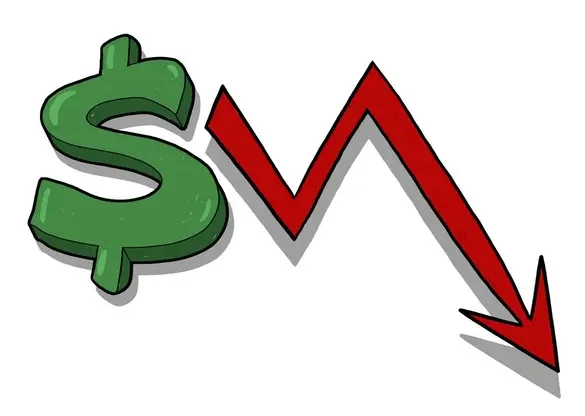
This is the other side of the equation.
Suppose the same property was originally purchased for:
£300,000
The government equity share is 20%, or £60,000.
But several years later the property is valued at:
£250,000
20% of £250,000 is:
£50,000
Under a percentage-based equity arrangement, the government's share would therefore move down with the property's value.
This is one of the major differences between an equity loan and a normal fixed loan.
With a conventional £60,000 loan, you would generally owe the £60,000 principal regardless of whether your house became worth £250,000 or £400,000.
With a percentage-based equity loan, the amount associated with the government's share can move with the property value.
Again, the exact Your First Home repayment mechanics need to be confirmed by the government before buyers should treat these examples as the final contractual rules.
Does this mean the government owns 20% of your house?

Not quite in the everyday sense.
You own the property, subject to the legal charge and terms attached to the equity loan.
The important point is that the government has an equity interest linked to the property.
This means buyers need to understand that the government's contribution can affect how much money they ultimately have available when they sell or repay the loan.
For example, if your property increases significantly in value, you may have built substantial equity yourself—but the government's percentage-based share may also have increased.
This is why buyers should not look only at the initial £60,000 contribution and think:
“I only have to give £60,000 back.”
That may not be how a percentage-based equity loan works.
The final Your First Home rules will determine the exact repayment mechanism.
Is the 20% equity loan a good thing?

There is no single answer for every buyer.
The scheme could solve one of the biggest problems facing first-time buyers: the deposit.
Someone might be able to afford a £1,500 or £1,700 monthly mortgage payment but struggle to save £15,000, £20,000 or £30,000 for a deposit while paying rent and living expenses.
A 2.5% deposit could significantly reduce that initial barrier.
However, the buyer should consider the entire financial picture rather than simply asking:
“How small can my deposit be?”
They should also consider:
- The mortgage interest rate
- Monthly mortgage payments
- The equity loan terms
- When interest begins on the equity loan
- The repayment rules
- What happens when the property rises in value
- What happens if the property falls in value
- Service charges on flats
- Ground rent where applicable
- New-build pricing compared with comparable properties
- Future selling restrictions
- Legal and valuation costs
- Whether they intend to stay in the property for several years
The cheapest way into a property is not necessarily the cheapest way to own it.
Why has the government introduced Your First Home now?
The timing is particularly interesting.
The government says the scheme is intended to help first-time buyers get onto the property ladder.
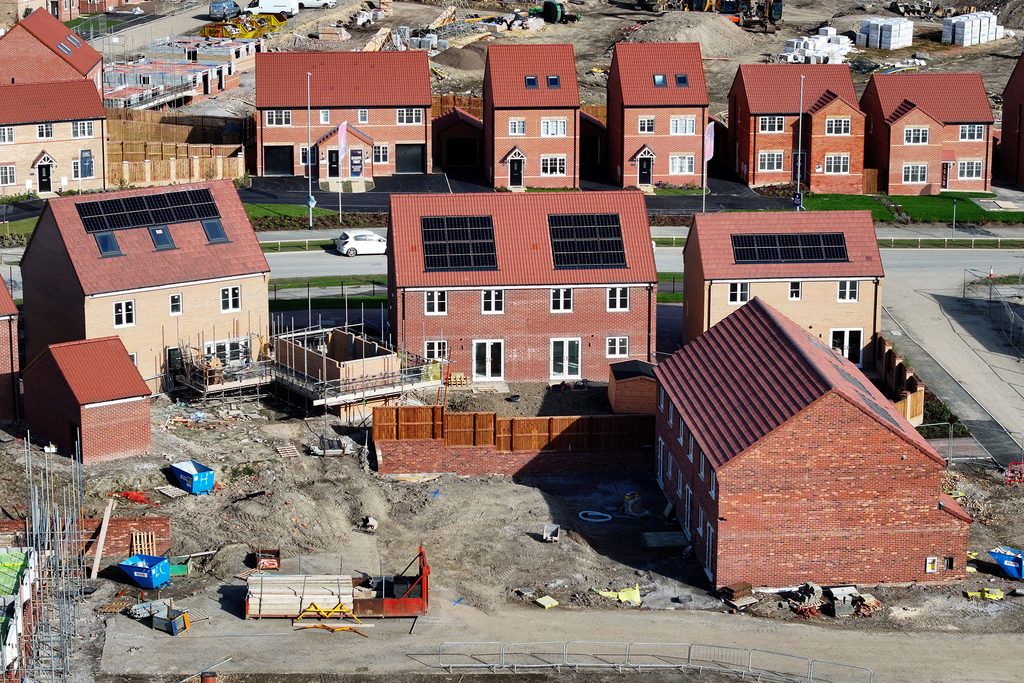
But it also openly identifies another objective: supporting the new-build housing market.
The government's announcement says the new-build market is facing difficult conditions because of economic pressures and higher construction costs, and that the scheme is intended to stimulate demand and support housing supply. Developers will also be expected to contribute when signing up to the scheme.
That matters because developers need buyers.
And the current London figures show just how difficult the new-build market has become.
London's new-build market: what do the numbers tell us?

London has experienced a significant slowdown in new-build sales.
According to Molior figures reported in August 2026:
January–June 2025: 8,840 new-build sales
January–June 2026: 5,606 new-build sales
That is approximately 3,234 fewer new-build sales in just six months, representing a fall of roughly 37%.
There were also 4,629 completed new-build properties sitting unsold in the three months to June 2026, with an estimated value of approximately £3.5 billion.
This isn't simply a first-time-buyer story.
It affects developers, construction companies, investors, mortgage lenders, estate agents and the wider housing supply chain.
The Greater London Authority's Housing in London 2025 report also showed how sharply sales on large developments had fallen. It reported that homes sold on large developments fell from a peak of 5,272 in Q1 2022 to 1,691 in Q2 2025.
So the government is introducing a scheme designed to increase purchasing power at a time when developers are dealing with weaker demand.
That is an important part of the story.
Is Your First Home mainly for buyers or developers?
Potentially, both.
For buyers, the purpose is straightforward:
Reduce the deposit barrier.
For developers, the potential benefit is different:
Increase the number of people who can afford to buy their new-build homes.
A developer may have a completed apartment or house that is ready to sell, but if potential buyers cannot raise a sufficient deposit, the property can remain on the market.
If the new scheme allows more buyers to qualify for mortgages, it could increase the pool of potential purchasers for participating developers.
This is particularly relevant in London, where new-build sales have fallen substantially.
However, the scheme does not automatically mean every new-build property will become affordable or that every developer will participate.
Developers will have to sign up, and the government has said developers will be expected to contribute towards the cost of the scheme.
Could a 2.5% deposit be risky?

A low deposit isn't automatically bad.
But it does mean you start with less of your own equity in the property.
Using our £300,000 example:
With a £7,500 deposit, the buyer starts with 2.5% of the property's value from their own cash.
If property prices fall shortly after purchase, the buyer could have very little equity—or potentially negative equity depending on the mortgage balance and the scheme's final structure.
For example, if a £300,000 property fell to £280,000, the property would have lost:
£20,000 in value.
That is why buyers should avoid viewing the scheme simply as:
“I only need £7,500 to buy a £300,000 house.”
The more useful question is:
“Can I comfortably afford this property over several years, including my mortgage, the equity loan arrangements and all the other costs of owning the home?”
Don't confuse Your First Home with the First Homes scheme
There is another government scheme called First Homes, and the names are easy to confuse.
They are not the same scheme.
The existing First Homes scheme can provide eligible first-time buyers with a 30% to 50% discount on the market value of a qualifying property. The property must be the buyer's main residence, and there are income and other eligibility conditions.
Under the existing First Homes scheme, the discount remains attached to the property when it is sold.
For example, if someone received a 30% discount, the property generally has to be sold with the same percentage discount based on its market value.
Your First Home is different.
Your First Home is being introduced as an equity loan scheme, with the government proposing up to a 20% equity contribution and a 2.5% deposit.
Buyers should therefore make sure they are asking the developer, mortgage adviser and conveyancer which scheme they are actually purchasing under.
What should first-time buyers do now?
If you are interested in Your First Home, there is no need to rush into a purchase simply because the scheme has been announced.
The most useful thing you can do now is prepare.
1. Work out your realistic budget
Don't start with:
“How much will the bank lend me?”
Start with:
“What monthly payment can I comfortably afford?”
Remember that your mortgage isn't the only cost.
Consider council tax, utilities, insurance, maintenance, service charges and other household costs.
2. Speak to a mortgage adviser
The government scheme does not mean every buyer will automatically receive a mortgage.
The lender will still need to assess affordability and creditworthiness.
3. Watch for the October Budget
The government has said further details will be announced at the Budget, including important eligibility and implementation details.
Until those rules are published, don't rely on social-media summaries or assumptions about the scheme.
4. Compare new-build properties carefully
A government-backed scheme doesn't change the underlying property.
Before buying, compare the property with similar homes in the area.
Look at:
- Recent sold prices
- Size
- Location
- Service charges
- Parking
- Lease length for flats
- Developer incentives
- Rental demand if relevant
- Resale potential
- Nearby developments
5. Understand the exit
Before signing anything, ask:
“What happens when I want to sell?”
and:
“What happens if the property increases in value?”
and:
“What happens if it decreases?”
Understanding the exit is just as important as understanding how you get into the property.
The bigger picture
Your First Home arrives at a time when the housing market is facing a difficult combination of problems.
First-time buyers are struggling with deposits.
Mortgage affordability remains important.
Developers are dealing with construction costs and weaker demand.
And London has seen a substantial decline in new-build sales.
For a buyer who has a stable income, can comfortably afford the mortgage and intends to remain in the property for a reasonable period, the scheme could potentially make homeownership accessible sooner.
But the 20% equity loan should not be viewed as free money.
The eventual cost depends on the final terms and, if the arrangement is percentage-based, what happens to the value of the property over time.
A £60,000 contribution on a £300,000 property can look very different if that property is worth £250,000, £300,000 or £400,000 when the equity is repaid.
That is why understanding the numbers matters.
Your First Home: The key numbers at a glance
| Current announced framework | |
|---|---|
| Who is it aimed at? | First-time buyers |
| Location | England |
| Property | Participating new-build developments |
| Minimum deposit announced | 2.5% |
| Government equity loan | Up to 20% |
| Mortgage | Remaining purchase price, subject to lender |
| Interest | Initial interest-free period announced |
| Income cap | To be confirmed |
| Local property price caps | To be confirmed |
| Implementation date | To be confirmed |
| Final rules | Expected at October 2026 Budget |
The government has not yet published all the final rules, so buyers should wait for the official scheme documentation before making decisions based solely on the headline figures.
Final thoughts for first-time buyers
The most important thing about Your First Home isn't the 2.5% deposit.
It's understanding what the other 97.5% means.
A smaller deposit can help you get through the door, but buying a home is a long-term financial commitment.
The right property, the right mortgage, the right affordability calculation and a clear understanding of the equity loan are all important.
And with London new-build sales falling from 8,840 to 5,606 in the first half of the year, there is a wider question worth watching:
Will Your First Home genuinely make homeownership more accessible—or will it primarily help developers move some of the new-build stock currently sitting unsold?
The answer may become clearer once the government publishes the full scheme at the October Budget.
For first-time buyers, however, the opportunity is worth understanding now.
If you are considering buying your first home, don't just ask what you can buy. Ask what you can comfortably afford, what you will owe, and what happens when you eventually sell.
Interested In Selling Your Property?
We’re here to help, and can answer any questions you may have. Contact us now for a free home valuation.